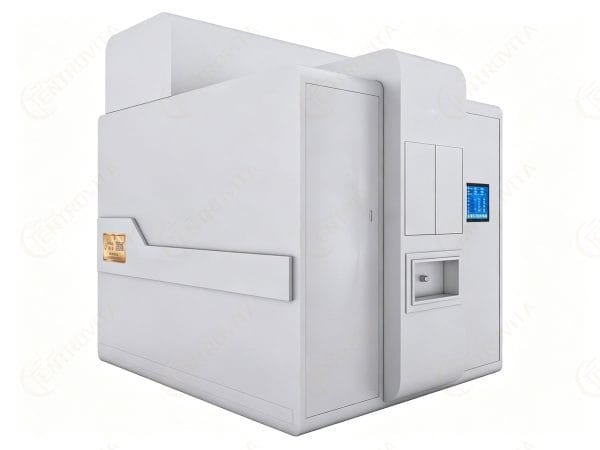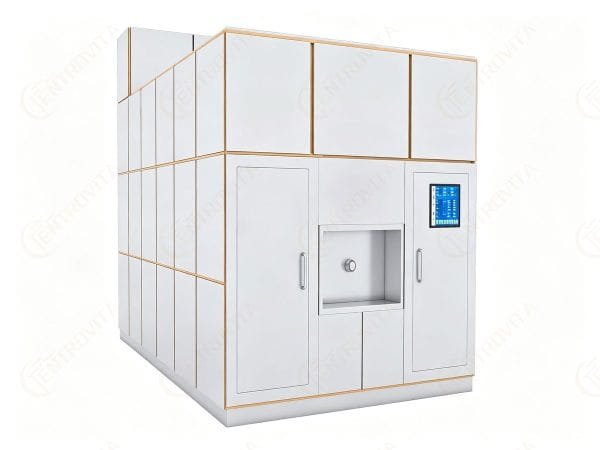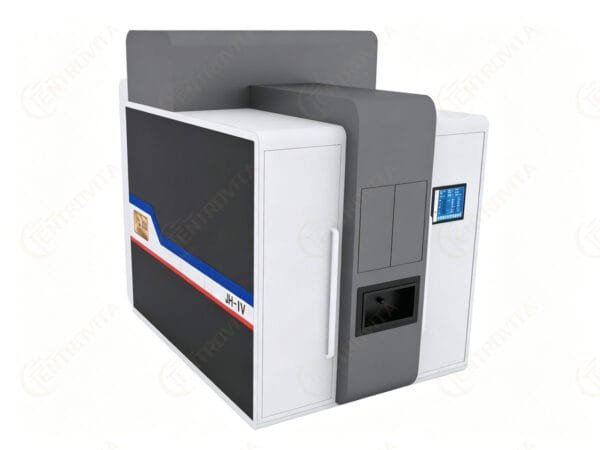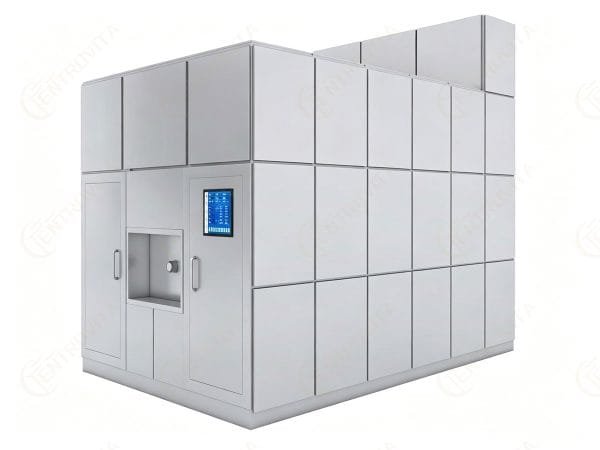
Dignity. Technology. Sustainability. — Redefining the Afterlife Industry.
Dignity. Technology. Sustainability. — Redefining the Afterlife Industry.
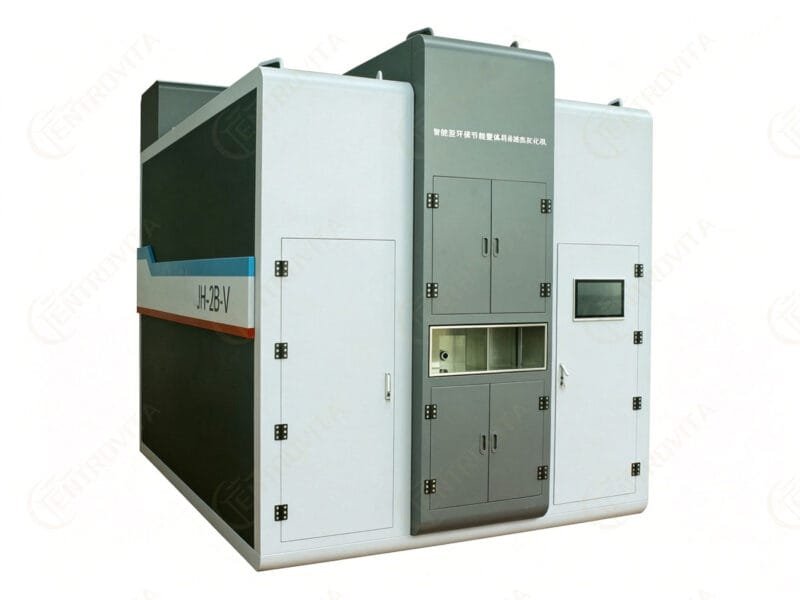
Stainless Steel
Mobile Hearth
Intelligent
Eco-Friendly
Intelligent Eco-Friendly Cremator — Fifth-Generation Dual-Chamber Cremation System
The GH-JH-3C-G5 is a fifth-generation intelligent, eco-friendly and energy-saving cremator engineered for crematorium operators who are judged on three things at once: fuel cost per cremation, emissions compliance, and the dignity of every service.
- Premium Quality
- Worldwide Shipping
- Best Warranty
Inside the machine, a dual-chamber combustion system pairs a 1.08 m³ primary chamber (750–1,000 °C) with a 1.16 m³ secondary chamber (850–1,050 °C), both held under negative pressure (−5 to −30 Pa). A built-in 2.3 m² air heater recovers flue heat and preheats secondary air to 100–200 °C, so the unit burns 6–12 kg of fuel per body and completes a cremation in 30–50 minutes in a hot furnace. Siemens PLC analog control, a 15-inch touchscreen at both the front and rear halls, and IoT-based remote monitoring put operation, diagnosis, and reporting on one platform. The machine is delivered factory-assembled and hoisted into place as a single unit, so installation quality no longer depends on what happens on your site.
At a glance
Why Crematorium Operators Choose the GH-JH-3C-G5 Cremator
| Buyer pain point | Why it matters | How this cremator answers it |
| Fuel cost per cremation keeps climbing | Fuel is the largest controllable cost line in a crematorium | 6–12 kg per body on a hot furnace; the 2.3 m² built-in air heater recovers flue heat and preheats secondary air to 100–200 °C; fuel and air circuits are modulated by analog control instead of running at a fixed rate |
| Emission permits are getting stricter | Non-compliance means restrictions, retrofit cost or lost licence | Dual-chamber architecture with an 850–1,050 °C secondary chamber and a long residence path to burn out volatiles; chamber pressure held at −5 to −30 Pa so nothing escapes |
| Smoke, odour and heat drift into the service hall | Complaints from families, health risk for staff, damaged reputation on tours | Two overflow-smoke collection hoods sit directly above the chamber, and the transfer car is fully enclosed, so the working area stays clean and quiet |
| Skilled operators are hard to hire and retain | A single resignation can stall the whole crematorium | One-touch start, automatic programme control, a self-intervention system and remote real-time operation; through the smart management platform the unit can run remotely or unattended |
| Poor site installation destroys performance | Unqualified assembly leads to warranty disputes and permanent underperformance | Whole-unit hoisting: the cremator is assembled and tested in our factory, then lifted into position as one piece — minimal site welding, repeatable quality |
| Unplanned downtime and slow overseas service | Each lost day is lost revenue and rescheduled services | Siemens PLC analog modules plus AI big-data analytics deliver automatic early warning and fault diagnosis; cloud remote support resolves most issues without a site visit |
| Complete ash recovery and family trust | Families expect every gram of ash, every time | Ash-collection (ash-picking) architecture with a 3–5 minute adjustable cooling cycle and complete ash retrieval, handled in a dignified sequence |
| Multi-site groups have no real-time visibility | Head office cannot see throughput, fuel use or equipment health | People, machines and materials are connected on the Funeral Equipment Smart Management Platform for cloud analytics, remote control and auditable operating records |
Key Features of the GH-JH-3C-G5 Cremator
1. Fifth-Generation “5 Systems + 1 Auxiliary” Architecture
The GH-JH-3C-G5 is built from five integrated systems — combustion, operation, programme control, self-intervention and remote control — supported by one set of auxiliary equipment. Everything reports to the Funeral Equipment Smart Management Platform, where cloud and big-data analysis interconnect people, machines and materials. The result is a smart, humane, and green operation that can be supervised remotely and, when workload demands it, run unattended.
2. Dual-Chamber Combustion for Complete Burn-Out
The 1.08 m³ primary chamber operates at 750–1,000 °C. Volatile gases then pass into a 1.16 m³ secondary chamber running at 850–1,050 °C, where they are held long enough to burn out. Both chambers are kept at −5 to −30 Pa, giving the combustion train the high-temperature, negative-pressure profile environmental regulators look for when assessing a crematorium.
3. Heat Recovery That Cuts Fuel Consumption
A 2.3 m² air heater is built into the machine, recovering heat from the flue path and preheating secondary air to 100–200 °C. That preheated air (300–400 Nm³/h at 4,000–5,000 Pa, moved by a 7.5 kW combustion-air fan) accelerates ignition and shortens each cycle, so each cremation needs less fuel. Where a single-chamber unit vents this energy straight to the stack, the GH-JH-3C-G5 puts it back into the burn.
4. Stainless Steel Body with Whole-Unit Hoisting Delivery
The main structure is fabricated in stainless steel for corrosion resistance and a long working life. More importantly for project timelines, the cremator leaves our factory fully assembled and tested, and is hoisted into your building as a single unit. This removes on-site tolerance issues that cause uneven chamber temperatures, air leaks, and premature refractory wear after a poorly executed site installation.
5. Intelligent, Human-Centred Control
A 15-inch touchscreen HMI is installed at both the front hall and the rear hall, driving Siemens PLC analog-module programming. One touch starts the cycle; the control system then automatically regulates chamber temperature and pressure by continuously adjusting its signal output. Operators can monitor the cremation in real time, take over remotely, and receive AI-based early warnings and fault diagnoses generated from operating data — so intervention happens before a fault becomes a stoppage.
6. Overflow-Smoke Collection Above the Chamber
A dedicated overflow-smoke collection device is mounted above the chamber. This is the deliberate fix for one of the most common complaints in older crematoria: smoke drifting out of the charging door and hanging in the workshop. Combined with the negative chamber pressure, it keeps the service hall and the family viewing area clean.
7. Enclosed Screw-Lift Transfer Car
The redesigned screw-lift transfer carriage is fully enclosed. It has a smaller footprint than conventional open trolleys, looks cleaner and tidier on the floor, and is easier to keep hygienic while carrying loads in the 0.3–0.7 t range.
8. Dignified, Human-Centred Machine Design
The exterior is deliberately styled rather than merely boxed: distinctive form, dignified presence, elegant lines and a colour palette chosen to sit calmly inside a service hall. Human-centred design carries through to the low-noise operation, the enclosed mechanism, and the smooth ash-collection sequence — because in this industry the machine is part of the ceremony.
Technical Specifications of the GH-JH-3C-G5 Cremator
| # | Parameter | Unit | Specification |
| 1 | Overall dimensions (L × W × H) | mm | 3,600 × 2,400 × 3,300 (±5%) |
| 2 | Primary combustion chamber volume | m³ | 1.08 |
| 3 | Primary combustion chamber working temperature | °C | 750–1,000 |
| 4 | Primary combustion chamber working pressure | Pa | −5 to −30 |
| 5 | Secondary combustion chamber volume | m³ | 1.16 |
| 6 | Secondary combustion chamber working temperature | °C | 850–1,050 |
| 7 | Secondary combustion chamber working pressure | Pa | −5 to −30 |
| 8 | Secondary air volume | Nm³/h | 300–400 |
| 9 | Secondary air pressure | Pa | 4,000–5,000 |
| 10 | Cremation time per body (hot furnace average) | min | 30–50 |
| 11 | Fuel consumption per body (hot furnace average) | kg | 6–12 |
| 12 | Combustion-air fan (7.5 kW) | unit | 1 (Q = 1,100 Pa, 12,000 m³) |
| 13 | Fuel types | — | Grade −20 to 0 light diesel oil, natural gas or LPG |
| 14 | Primary chamber burner | unit | 1 |
| 15 | Fully automatic combustion burner | unit | 1 |
| 16 | Built-in air heater area | m² | 2.3 |
| 17 | Heated secondary air temperature | °C | 100–200 |
| 18 | Flue gas outlet temperature | °C | 700–950 |
| 19 | Heat-resistant steel-framed zirconia-fibre blanket door | piece | 1 |
| 20 | Overflow-smoke collection hood | pc | 2 |
| 21 | Door opening/closing mechanism with manual override | set | 1 |
| 22 | Total installed power | kW | 18.5 |
| 23 | Net machine weight | t | 13 |
| 24 | Transfer car weight | t | 0.3–0.7 |
| 25 | Ash cooling time | min | 3–5 (adjustable) |
| 26 | Control system | set | 15-inch touchscreen HMI (front and rear halls) with Siemens PLC analog-module programming; one-touch start; analog control of fuel and air circuits; remote real-time operation; AI big-data analytics for automatic early warning and fault diagnosis |
| 27 | Service life | cremations | 12,000 |
Figures are nominal design values under standard operating conditions (hot furnace, average adult body weight). Fuel consumption, cycle time and emission performance vary with body weight, fuel calorific value, loading practice, flue-gas treatment configuration and ambient conditions. Installed power covers the machine’s own loads; the client provides supply, flue ducting, and foundation work. Confirm the configuration for your jurisdiction with our engineering team before ordering.
Applications: Where This Cremator Performs Best
- Municipal and private crematoria — new-build projects, capacity expansion, and replacement of ageing single-chamber cremators that have become expensive to fuel and hard to permit.
- Funeral homes adding an in-house cremation machine — including first-time buyers who need equipment a small team can operate confidently; industry data shows roughly 30% of funeral homes already operate their own crematory and around 10% more plan to add one.
- Funeral service groups standardising equipment — one control philosophy, one spare-parts pool and one reporting platform across multiple sites.
- Hospitals, mortuaries and public health facilities — where hygiene, containment and auditable records matter more than throughput.
- Turnkey crematorium projects — EPC contractors, integrators and distributors who need predictable delivery, factory-tested equipment and remote diagnostics to protect the service contract.
- Regulated export markets — the UK, the EU, North America, the Gulf, Southeast Asia, Africa and Latin America, where the dual-chamber high-temperature architecture supports the documentation customers need for permits.
Installation, Commissioning and Long-Term Support
- Factory-assembled, whole-unit delivery. The cremation machine is built, wired, and dry-tested before shipment, then hoisted into position as one unit — cutting site work, reducing installation risk, and shortening the path to first cremation.
- Engineering package included. We supply dimensioned layout drawings, foundation and utility requirements (including the 18.5 kW electrical supply and flue connection), plus the operating and maintenance documentation your team and your inspector will ask for.
- Commissioning and operator training. Start-up, burner tuning, and hands-on training so your operators are running the machine confidently rather than learning by trial.
- Remote diagnostics after handover. Because the machine reports to the smart management platform, most faults are identified from data before they become failures, reducing the need for long-distance service visits.
- Service life engineered in—a stainless steel body and a design rated for 12,000 cremations, supported by scheduled maintenance guidance.
Frequently Asked Questions About the GH-JH-3C-G5 Cremator
How much fuel does the GH-JH-3C-G5 cremator use per cremation?
Fuel consumption is 6–12 kg per body on a hot furnace. The range reflects body weight, loading practice, and chamber temperature. The built-in 2.3 m² air heater preheats secondary air to 100–200 °C, recovering energy that a single-chamber cremator would send up the stack.
How long does one cremation take?
30–50 minutes per body in a hot furnace, followed by an adjustable 3–5 minute ash-cooling cycle before ash collection.
Does this cremator meet EU, UK, or US emission requirements?
The design targets the combustion profile regulators expect: a secondary chamber at 850–1,050 °C, a long residence path, and negative chamber pressure. For reference, the EU Industrial Emissions Directive (2010/75/EU) sets a minimum secondary chamber temperature of 850 °C with two seconds of residence time for incineration plants, and the UK’s crematoria process guidance (PG 5/2(12)) sets binding emission limit values for crematoria. Final compliance depends on the flue-gas treatment train and the permit issued by your local authority — tell us your jurisdiction, and we will propose the matching configuration.
Can one operator run the cremator remotely, or even unattended?
Yes. One-touch start, automatic programme control and analog fuel/air regulation mean the cycle largely runs itself. The 15-inch touchscreen HMI at the front and rear halls, Siemens PLC analog modules, remote real-time operation, and AI-driven early warning and fault diagnosis allow remote supervision through the smart management platform.
Is the cremator shipped assembled, and how is it installed?
It is delivered factory-assembled and tested, then installed by whole-unit hoisting—lifted into the building as a single piece. Site work is limited to positioning, utility connections, and flue hook-up, which is what protects chamber alignment and installation quality.
What fuels and what electrical supply does it need?
Grade −20 to 0 light diesel oil, natural gas, or LPG, fired through one primary chamber burner and one fully automatic combustion burner. Total installed power is 18.5 kW, including a 7.5 kW combustion-air fan.
How long does the cremator last, and is complete ash recovery guaranteed?
The machine is rated for 12,000 cremations, with a stainless steel main structure and the maintenance regime documented for your team. The ash-collection architecture is designed for complete, traceable ash retrieval with a dignified, adjustable cooling sequence.
Request a Quote for the GH-JH-3C-G5 Cremator
Planning a new crematorium, adding capacity, or replacing a cremator that costs too much to run? Send us your requirements, and we will come back with a configuration matched to your throughput, fuel supply, and local emission rules.
What we will send you:
- A written quotation for the GH-JH-3C-G5 with the furnace configuration recommended for your site
- The full technical specification sheet, dimensioned layout drawing and utility requirements
- Fuel-consumption and cycle-time estimates based on your expected annual case volume — so you can model the operating cost against your current equipment.
- Delivery schedule, installation scope and after-sales service terms for your country
Tell us three things, and we can quote quickly: your expected cremations per day, your available fuel (diesel, natural gas or LPG), and your city or country.
[Request a Quote →] · [Download the Technical Datasheet] · [Talk to an Engineer]
Related products
 Fixed HearthEco-Friendly
Eco-Friendly Human Cremation Furnace
GH-PB-3C-G3- Fixed HearthEco-Friendly
Eco-Friendly Human Body Cremation Machine
GH-PB-1C-G2 - Stainless SteelMobile HearthIntelligentEco-Friendly
4G Smart Eco-Friendly Cremation Machine
GH-JH-3C-G4 - Mobile HearthIntelligent
Intelligent retort machine for cremation
GH-JH-1A-G1