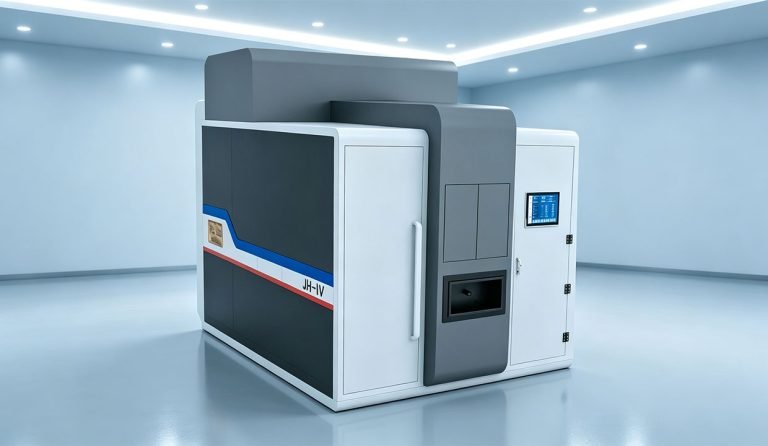
Dignity. Technology. Sustainability. — Redefining the Afterlife Industry.
Dignity. Technology. Sustainability. — Redefining the Afterlife Industry.
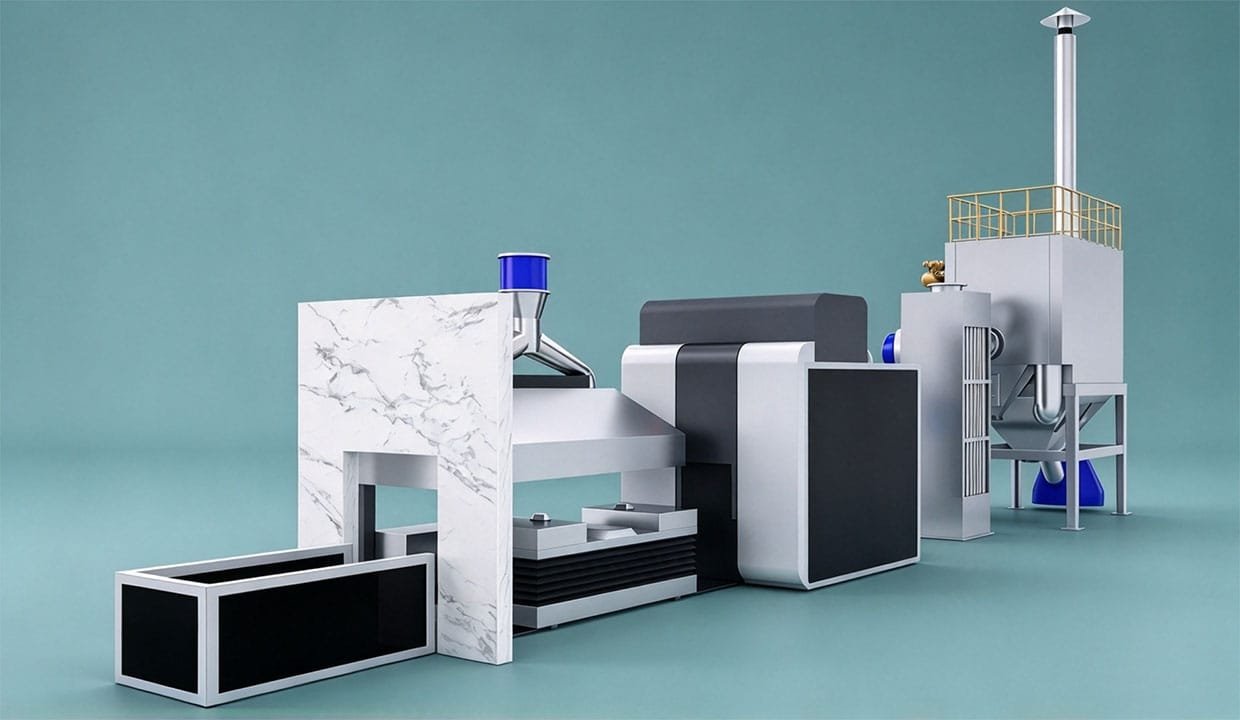
Flat vs. Ash-Collection Cremators: Which One Is Right for You?
The difference between a flat hearth cremator and an ash-collection cremator is not the combustion chamber — it is what happens to the cremated remains when the cycle ends. A flat hearth unit leaves the ash on the hearth floor, where an operator must rake and sweep it out by hand. An ash-collection cremator moves the remains into a dedicated collection chamber or tray through a mechanical transfer system, so the chamber does not have to be entered for every case.
That single design decision ripples through almost everything a buyer cares about: turnaround time, physical workload per case, cleaning frequency, building fit, up-front cost, and service cost over the next fifteen years. This guide compares both configurations across the factors that actually drive a purchasing decision, then gives you a scenario-based checklist for choosing.
What “Flat” and “Ash-Collection” Actually Mean
A flat hearth cremator (sometimes called a flat-bed or horizontal hearth unit) uses a single-level, flat floor inside the primary chamber. The container is loaded onto that floor, and combustion takes place in place. When the cycle completes, the remaining bone fragments and ash sit on the hearth floor and are removed manually — typically by raking them toward a discharge opening and sweeping them into a collection pan.
An ash-collection cremator is built around a transfer mechanism: a sloped or retractable hearth floor, a pusher, a gravity chute, or an automated tray system that deposits the remains into a sealed container. The goal is the same in every variant—the operator handles the ash after it leaves the chamber, not inside it. Some manufacturers offer both configurations on the same frame, which signals that the choice is genuinely about workflow and budget rather than combustion performance.
Side-by-Side Comparison
The table below summarizes the practical differences. Confirm each line against the specific model you are quoting, as designs vary widely between manufacturers.
| Factor | Flat hearth cremator | Ash-collection cremator |
| Ash retrieval method | Manual rake and sweep from hearth floor | Mechanical transfer to collection tray or chamber |
| Operator exposure to hot chamber | Higher; chamber entered or reached into while warm | Lower; ash handled outside the hot zone |
| Time per case turnaround | Longer; cleaning is part of the cycle | Shorter; cleaning largely decoupled from the cycle |
| Physical labor per case | High — repeated, kneeling or reaching posture | Moderate — container handling rather than sweeping |
| Cleaning frequency | Daily or per-case hearth sweeping | Reduced chamber cleaning; collection tray emptied instead |
| Wear pattern | Refractory floor and rear wall take direct abrasion | Transfer mechanism adds moving parts that wear |
| Floor space/siting | Simpler footprint; manual work area needed in front | Larger footprint or added height for transfer hardware |
| Operating interfaces | Simpler control package | More interlocks, sensors, and automation |
| Up-front cost | Lower | Higher — mechanism, controls, and enclosures added |
| Long-term cost profile | Labor-heavy; lower parts count | Parts- and service-heavy; lower labor per case |
| Emissions compliance | Comparable if both meet local limits | Comparable if both meet local limits |
| Best fit | Low-to-moderate volume, budget-constrained, hands-on operations | Higher volume, staff-constrained, or workflow-critical operations |
Operating Flow: How Each Machine Turns a Case Around
Workflow is where the two designs diverge most in daily practice.
Loading and Combustion
Both configurations load from the front. This is worth clarifying because “bottom-load” and “front-load” are sometimes used in sales material as though they were the same distinction as flat versus ash-collection. They are not — loading direction and ash-handling method are separate choices, and a cremator can be front-loading with either ash system. Combustion follows the same general sequence in both: primary chamber ignition, a secondary chamber or afterburner to complete combustion of gases, and a controlled cool-down before handling the remains. The manufacturer and local air-quality rules set chamber temperatures, residence times, and cool-down periods, and you should confirm them in writing.
Ash Retrieval
This is the core difference. On a flat hearth, the operator opens the chamber, rakes the remains toward the discharge point, and sweeps them out. Timing matters: the hearth must be cool enough to work safely, so retrieval usually happens after a cool-down interval. The remains are then processed in a cremulator to a uniform consistency.
On an ash-collection design, the transfer happens mechanically. The operator actuates the mechanism — or the system runs it automatically at the end of a cycle — and the remains land in a container that is removed and processed. The chamber stays largely undisturbed.
Case Turnaround
Because flat hearth retrieval is bounded by cool-down and hands-on cleaning, the interval between cases tends to be longer. Ash-collection designs shorten it, which matters when daily volume is high, or scheduling is tight. Actual turnaround times depend on chamber size, load weight, and local operating procedures, and no universal figure applies.
Labor Intensity and Operator Safety
Labor is frequently underestimated in equipment budgeting, and it is where the two designs separate most clearly over a five-year horizon.
A flat hearth cremator is labor-intensive by construction. Every case requires an operator to physically retrieve the remains, often in a posture — bending, reaching, kneeling — that carries ergonomic risk over a career, and in a hot, dusty environment immediately after a high-temperature process. An ash-collection unit shifts the labor from sweeping to container handling: easier on the operator and faster per case, but not zero labor, since trays must be emptied and seals inspected.
If your staff cost per hour is high, or you struggle to cover shifts, the labor reduction can offset a meaningful share of the higher purchase price. If labor is cheap and volume is low, that offset largely disappears.
Cleaning, Maintenance, and Service Life
The maintenance profiles mirror each other. Flat hearth units have fewer moving parts and simpler service, but the hearth floor and rear wall absorb more direct abrasion from raking and more thermal cycling — service is largely inspection, refractory patching, and periodic rebuild. Ash-collection units keep the chamber interior cleaner, which can extend the life of some refractory surfaces. Still, the transfer mechanism adds motors, actuators, seals, and sensors that wear, need attention, and can fail. A transfer-system failure can stop production entirely — a different risk profile from a gradually worn hearth floor.
Ask both suppliers the same two questions: what is the expected service interval for the highest-wear component, and what does a replacement cost?
Siting, Footprint, and Facility Fit
Flat hearth units are usually the easier retrofit. The machine needs a work area in front of the discharge point, but the equipment itself is simpler and clearances more forgiving. Ash-collection units need room — or height — for the transfer hardware and collection station, which in an existing building can mean reconfiguring a wall, raising a ceiling, or relocating adjacent equipment. For a new build, the constraint is minor; for a retrofit, it can be decisive. Facilities with restricted access, low headroom, or a tight loading area should map the machine’s full envelope, including service access, before assuming a larger automated unit will fit.
Up-Front Investment and Long-Term Cost
The capex and opex profiles point in opposite directions.
| Cost line | Flat hearth | Ash-collection |
| Purchase price | Lower baseline | Higher; mechanisms and controls add cost |
| Installation complexity | Simpler | More complex — siting, power, and interfaces |
| Labor per case | Higher | Lower |
| Consumable parts | Fewer | More moving components |
| Downtime risk | Wear-driven, gradual | Mechanism-failure-driven, potentially sudden |
| Training requirement | Basic | Higher; more procedures and interlocks |
The honest comparison isn’t sticker price but cost per cremation over the machine’s service life: purchase price amortized over projected case volume, plus labor hours per case, plus parts and service. A facility processing a few hundred cases a year may never recover the ash-collection premium through labor savings; one running multiple shifts at high volume often will. Specific price differentials, service-life estimates, and labor-time figures should come from written quotes and your own time study, not from a generic guide.
Emissions, Compliance, and Regulatory Considerations
A common assumption is that one design is inherently cleaner. In practice, emissions performance is a function of the combustion system, the afterburner, and the abatement equipment — not of the ash-handling method. Both configurations can include secondary chambers, residence-time controls, and filtration, and both must meet the same local limits. What differs is how compliance is demonstrated and maintained:
- Many jurisdictions require temperature and residence-time monitoring regardless of design.
- Opacity and particulate limits apply to the stack, not the hearth.
- Housekeeping and dust control during ash retrieval are operational compliance concerns. Manual raking in an open chamber generates more fugitive dust potential than a sealed transfer, which is a genuine point in favor of enclosed ash-collection designs in tightly regulated markets.
Confirm the applicable limits, monitoring obligations, and permit conditions with your local environmental regulator before specifying equipment. Requirements vary substantially by country, state, and municipality, and the permit — not the machine — is often the longest-lead item.
Selecting the Right Configuration: A Scenario Checklist
Use these scenarios as a starting point, then validate against your own volume data.
Choose a flat hearth cremator if:
- Annual case volume is low to moderate and turnaround time is not a constraint.
- Your capital budget is tight, and you can absorb the labor.
- You have hands-on operators who prefer a simple, low-electronics machine.
- Your building has limited space, low headroom, or awkward access.
- You are comfortable with a labor-heavy but parts-light cost profile.
Choose an ash-collection cremator if:
- You run high daily volume or multi-shift schedules where turnaround time drives revenue.
- Labor is scarce, expensive, or a retention concern.
- You want to reduce operator exposure to heat and dust.
- Dust and housekeeping are a compliance sensitivity in your jurisdiction.
- You can accommodate the larger footprint and higher capex in exchange for lower per-case labor.
Choose either, but specify carefully, if:
- Your volume is moderate but growing — size for three-to-five-year projections.
- You need a single unit to serve both human and pet cremation workflows.
- Your permit conditions are strict — confirm the chosen design can meet them before you order.
Questions to put to every supplier:
- What is the documented ash-retrieval procedure and expected time per case?
- Which components are wear items, at what interval, and at what cost?
- What are the temperature, residence-time, and cool-down specifications in writing?
- What training and documentation are included?
- What does a comparable facility’s five-year service history look like?
Frequently Asked Questions
Is an ash-collection cremator more expensive than a flat hearth cremator?
Generally yes, because the transfer mechanism, additional controls, and enclosures add cost. The differential varies by manufacturer, capacity, and whether the unit is new or refurbished, so compare written quotes on a total-cost basis.
Does an ash-collection cremator produce cleaner emissions?
Not inherently. Emissions depend on the combustion chamber, afterburner, and abatement equipment, not on how ash leaves the chamber. An enclosed transfer system can reduce fugitive dust during retrieval, which may help with housekeeping-related compliance, but stack limits are met through combustion and filtration design.
How much operator time does ash retrieval take on each design?
Flat hearth retrieval is bounded by cool-down and manual raking, so it takes longer per case; ash-collection designs move the remains mechanically and shorten the task. The actual difference depends on chamber size, load weight, and your standard operating procedure.
Can a flat hearth cremator handle high daily volume?
It can, but labor and turnaround time compound with volume. At high case counts, accumulated retrieval and cleaning time often becomes the operational bottleneck — the main commercial argument for ash-collection designs.
Which design is better for a funeral home just starting?
For low volume on a constrained budget in an existing building, a flat hearth unit is frequently the more practical entry point. If you expect rapid volume growth or already know labor will be tight, model the ash-collection option before deciding — the higher capex may be cheaper over its service life.
Conclusion
Flat hearth and ash-collection cremators perform the same core function through different workflow philosophies. The flat hearth puts the labor in the operator’s hands and keeps the machine simple and inexpensive. The ash-collection design automates the transfer, shortening turnaround and reducing physical strain, at the cost of higher capital outlay and a more complex service profile.
Neither is universally better. The right choice depends on three inputs: your realistic annual case volume, the true cost and availability of labor, and your building’s physical constraints. Size to three-to-five-year projections rather than today’s numbers, price the permit and installation before you sign, and compare total cost per cremation rather than sticker price.
If you are scoping a new crematory or replacing a unit, request a quote with your projected case volume, staffing model, and facility constraints — those three variables determine the right configuration more than any specification sheet.