Dignity. Technology. Sustainability. — Redefining the Afterlife Industry.
Dignity. Technology. Sustainability. — Redefining the Afterlife Industry.
How to Start a Crematorium: Complete Equipment Checklist
Starting a crematorium is an equipment project before it is anything else. Crematorium equipment determines what you can legally operate, how many cremations you can accept per day, and what your cost per cremation lands at once the building is quiet and the first invoice arrives. This guide gives you the complete equipment checklist for opening a crematorium, category by category — what each item does, what drives its price, and the decisions that are expensive to get wrong. It then covers siting, permits, staffing, and training, and closes with a realistic action sequence for the next ninety days.
Read this before you request a quote. The order in which you buy equipment is not the order in which it appears in a catalog, and that sequencing protects your budget.
The Eight Equipment Categories at a Glance
A complete crematorium includes eight equipment categories. You need every one of them in some form. You can’t substitute one for a renovation budget. Use this table to scope the whole crematorium equipment list before you contact a single supplier.
| # | Category | What it does | Typical share of equipment capex |
| 1 | Cremation retorts (cremators) | Primary combustion of the casket and remains | 45–60% |
| 2 | Emission and flue gas control | GreatTreats secondary combustion and filters stack emissions | 10–20% |
| 3 | Body refrigeration and storage | Holds remains between intake and cremation | 5–10% |
| 4 | Handling and identification | Transfer, tracking, and custody control | 2–5% |
| 5 | Ash processing (cremulator) | Reduces and homogenizes cremated remains | 3–6% |
| 6 | Front-of-house and viewing | Public receiving, arrangement, and witness areas | 5–15% |
| 7 | Business and workflow software | Case management, scheduling, records | Under 3% |
| 8 | Safety, PPE, and cleaning | Regulatory compliance and staff protection | Under 3% |
The procurement sequence almost nobody follows: decide cremator capacity and fuel first, buy the emission train that matches the cremator, and only then design the building around both. Operators who build a shell first and fit equipment later routinely pay for a stack they could have sized during design.
Category 1: Cremation Retorts (Cremators)
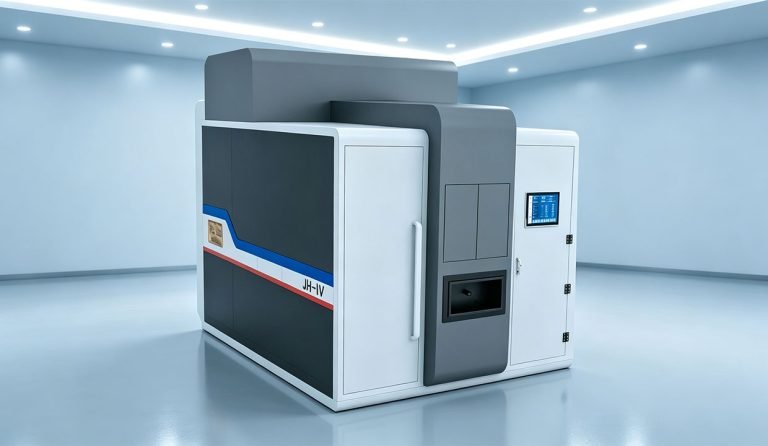
What it is. A cremation retort — also called a cremator, cremation furnace, or cremation chamber — is the refractory-lined primary chamber where cremation takes place. A complete retort includes the primary chamber, a secondary or afterburner chamber, a burner control system, a charging door, and a hearth. A facility cannot hold a crematory license without one.
What it does in your workflow. It is the bottleneck of your entire operation. Every other decision — storage capacity, staffing levels, scheduling software, and how fast you can return remains to a family — is downstream of retort throughput.
Key purchasing considerations
1. Throughput is the first decision, not the last. Retort capacity is rated in cremations per hour or per day and depends on body weight, casket material, and operator practice. Estimate your five-year volume, not your first-year volume. A unit sized for today’s caseload with no headroom caps revenue at exactly the moment the business becomes viable, and retrofitting capacity later means rebuilding the emission train as well.
2. Fuel type. Natural gas is the most common fuel where supply exists because it is stable, widely serviceable, and usually the lowest cost per cremation. Propane serves rural sites without a gas main but costs more and requires on-site storage. Electric retorts eliminate flue gas at the retort but move the emissions question to the electricity source and change your operating cost profile; they are common in markets where natural gas infrastructure is unavailable or where local policy favors electrification. Confirm fuel availability, tariff structure, and emergency supply before you commit — this single decision constrains your whole crematorium equipment specification.
3. Automation level. Entry-level manual units require an operator to manage charging, cycle profile, and ash removal. Automated and programmable units cycle profiles, log temperatures, and support remote monitoring, reducing operator error and producing the records auditors ask for. Automation costs more up front but less in labor and repeat testing.
4. Compliance-ready configuration. Your retort must meet the emission limits in your local permit—usually by holding defined minimum temperatures and residence times in the secondary chamber. Confirm the unit meets your jurisdiction’s requirements rather than assuming a specification from one country satisfies another. See [cremation flue gas emission standards] for how these limits differ by region.
5. Refractory and service network. The refractory lining is the highest-wear component and the largest recurring maintenance cost. Ask for the refractory warranty, the expected rebuild interval at your planned case volume, and — critically — whether a service technician and a parts supply chain reach your site within a commercially reasonable time. A lower-priced imported unit with a 4,000-mile parts pipeline is not a lower-cost unit.
6. Capacity for the largest cases. Confirm the manufacturer’s stated maximum and the practical maximum at your site. A retort that cannot accept your region’s larger cases without modification is a liability in daily operation.
Budget placeholder
Plan your budget around a retort price band quoted by your shortlisted suppliers — not a number published in an article, including this one. Retort pricing varies widely by fuel type, automation level, throughput, and country of manufacture, and you need a written quotation against your specification. Request at least three.
Budget separately, and budget more than you expect, for installation, rigging, fuel connection, electrical work, and stack fabrication — the delivered-machine price is not the installed cost.
Category 2: Emission Control and Flue Gas Treatment
What it is. The abatement train that treats exhaust before it leaves the stack: secondary combustion chamber, flue and stack, and depending on jurisdiction, additional abatement such as filtration, cyclone separation, or mercury control.
What it does in your workflow. It converts the retort from a combustion device into a permitted emission source. In most jurisdictions, this category is not optional and cannot be retrofitted after commissioning without re-permitting.
Key purchasing considerations
- Residence time and temperature. Secondary chambers are typically specified to hold exhaust above a minimum temperature for a minimum residence time. Your permit will test against this parameter.
- Emission limits are local. There is no single international standard. National and sub-national regimes differ on particulate matter, carbon monoxide, mercury, and dioxins. Design to the permit you will actually be issued.
- Monitoring and telemetry. Continuous temperature logging is the most common form of required compliance evidence. Choose a control package that records and exports what your regulator asks for.
- Stack design. Height, exit velocity, and surrounding building geometry all affect dispersion and sometimes local approval. Treat stack design as an engineering deliverable, not a purchase-order line item.
Budget placeholder
Abatement is usually priced with the retort as a system and is a meaningful percentage of the retort cost. Where mercury abatement is mandatory, expect a step change in both capital and operating cost, including filter media replacement. Obtain system-level quotes rather than component-level estimates.
Category 3: Body Refrigeration and Cold Storage
What it is. Refrigerated storage that holds remains between intake and cremation: walk-in coolers, upright and roll-in mortuary refrigerators, and refrigerated units for viewing or transfer.
What it does in your workflow. It decouples intake from cremation. Without it, you can only accept a body when the retort is free, and every delay becomes an operational crisis.
Key purchasing considerations
- Capacity against peak, not average. Size to your busiest week. Under-capacity storage is the failure most new facilities discover during their first seasonal peak.
- Temperature set point and monitoring. Hold the range your local rules require, and specify continuous monitoring with alarms and logging rather than a dial thermometer. Storage temperature is one of the first records an inspector requests.
- Redundancy and standby power. A single cooling unit with no backup is a single point of failure for every case on site. Confirm alarm coverage and generator provisioning.
- Siting. Coolers need ventilation, drainage, and service access. Plan this in the building design, not after it.
- Fit with cremation workflow. Locate storage on the path between receiving and the retort charging area. An extra fifty feet of corridor moves every case you will ever handle.
Budget placeholder
Storage equipment is priced per unit or per room by volume, and varies with refrigeration type, controls, and finish. For the temperature and compliance fundamentals, see the [mortuary refrigeration temperature] guide.
Category 4: Handling, Transfer, and Identification
What it is. The equipment that moves and tracks remains and cremated remains: transfer and church trucks, mortuary tables and preparation surfaces, body lift or transfer devices, cadaver bags and shrouds, personal protective equipment, identification tags and wristbands, and cremation trays or containers.
What it does in your workflow. It protects dignity, staff safety, and the integrity of your custody record. Identification equipment is not clerical overhead — it is the physical control that prevents the single most damaging error a crematory can make.
Key purchasing considerations
- Traceability over cost. Choose identification hardware that supports a numbered-wristband-plus-log protocol and survives the full process. A tag that detaches in the retort is worse than no tag.
- Ergonomics. Transfer and lifting equipment reduces injury risk for staff handling repeated loads. Back injury is the most common workers’ compensation claim in this work category.
- Cross-contamination control. Surfaces, trays, and processing tools must be cleanable and either dedicated per case or decontaminated between cases.
- Container compatibility. Confirm your trays and containers fit your retort charging system and your storage racks. Different people usually buy these three specifications and often don’t match.
Budget placeholder
This category is low-cost per item and high-volume, which makes it the one most often under-budgeted. Build a complete list before requesting quotes rather than buying piecemeal.
Category 5: Ash Processing — Cremulators and Related Equipment
What it is. The cremulator (also called a cremation processor or ash mill) reduces cremated bone fragments to uniform particle size. The category also includes magnetic separation for metallic implants, ash collection trays, and labeled transfer containers for returned remains.
What it does in your workflow. It produces the material you return to a family — the physical deliverable of the service. It also captures and separates orthopedic hardware, which some jurisdictions require to recover and recycle rather than return.
Key purchasing considerations
- Processing time and duty cycle. A low-capacity processor becomes a queue behind the retort. Match processing capacity to retort throughput.
- Sanitation and dust control. Choose units designed for cleaning between cases, with dust containment that protects both staff and the working environment.
- Metal separation. Confirm whether separation is integrated or a separate step, and confirm the disposal or recycling route for recovered metal.
- Hygiene of the output. Uniformity matters because families handle the result. Vibration, blade design, and chamber finish all affect it.
Budget placeholder
Cremators are priced by capacity and automation, and sit modestly in the overall equipment budget — but the accessory list around them (trays, liners, labels, metal handling) adds up. Price the complete workflow, not the machine alone.
Category 6: Front-of-House, Arrangement, and Viewing Facilities
What it is. The public-facing side of the facility: arrangement and reception area, family seating, witness and viewing room, memorial display for urns, restrooms, and accessibility provisions.
What it does in your workflow. It is where you sell, and where families form the impression they will repeat to others. This category is often value-engineered to nothing in a first build, and it determines whether referrals come.
Key purchasing considerations
- Separate public paths from operational paths. Families should never cross the route that remains and equipment travel. This single planning decision affects layout, cost, and reputation.
- Witness cremation provisions. If you offer attended witness cremation, the viewing area needs its own design specification, sightlines, and access control — planned before construction, not added after.
- Furniture flexibility. Arrangement spaces need to reconfigure for different family sizes and for pre-need consultations.
- Acoustics, lighting, and air quality. These are the difference between a facility that feels institutional and one that feels respectful, and they cost far less when designed in.
Budget placeholder
Front-of-house costs are driven by building area, finish level, and local construction costs rather than by equipment pricing. Treat this as a construction line item with a furniture sub-line, and have a contractor familiar with assembly and ceremonial occupancy cost it.
Category 7: Business, Records, and Scheduling Software
What it is. The system that holds your operation together: case management and chain-of-custody records, cremation authorization and documentation, retort scheduling, maintenance and compliance logs, contract and invoicing, and family communication.
What it does in your workflow. It is your legal record. When a regulator or a family asks who authorized what, when it was done, and who did it, the software either answers in thirty seconds or does not answer at all.
Key purchasing considerations
- Record completeness over feature count. Prioritize chain of custody, authorization capture, and audit-ready exports over cosmetic features.
- Retort and storage integration. Systems that log equipment temperatures and maintenance events directly reduce the manual paperwork that causes compliance gaps.
- Data ownership and export. Confirm you can export your records in a portable format. Your records outlive your vendor relationship.
- Scalability. Select a platform that handles a second retort and a second location without a migration.
- Staff adoption. Software that field staff doesn’t use creates a parallel paper system—the worst of both.
Budget placeholder
Software is subscription- or license-priced by seats and modules, and is the smallest line in the equipment budget for a reason: it is also the cheapest line to get wrong and the most expensive to remediate after a records request.
Category 8: Safety, Personal Protection, and Cleaning
What it is. Personal protective equipment, bloodborne pathogen controls, sharps-safe handling, heat-resistant gloves and aprons, air quality management in work areas, fire safety and extinguishing provisions, surface disinfection supplies, spill response materials, and waste handling for the non-ash residues.
What it does in your workflow. It converts a competent operation into a compliant employer. In most jurisdictions, this category carries hard legal obligations, not recommendations.
Key purchasing considerations
- Bloodborne pathogen compliance is a baseline. Occupational rules on bloodborne pathogens apply to anyone handling human remains. A written exposure control plan, training records, and supplied PPE are typically mandatory, not advisory.
- Heat and burn protection. Charging a retort and handling hot metal require rated gloves, aprons, and face protection.
- Cleaning is contamination control, not housekeeping. Select cleaning chemistry and methods compatible with your surfaces and validated for the room’s biological load.
- Fire safety. Confirm extinguisher class and placement, and confirm your insurer’s requirements before commissioning the retort.
- Written procedures. Equipment without written procedures is a liability in an inspection. Budget time, not just money, for writing them.
Budget placeholder
Unit costs are low, but the required quantities and the compliance overhead are easy to underestimate. Build this list against your local occupational safety rules and your insurer’s conditions.
Siting: What Makes a Site Workable
Equipment will not fix a bad site. Confirm these six conditions before you sign a lease or close on land.
- Zoning classification permits crematory use. This is the single most common project-ending discovery. Confirm permitted use in writing with the planning authority before you spend on design.
- Industrial or appropriately buffered neighbors. Proximity to residences, schools, and food businesses drives both permitting difficulty and complaint risk.
- Fuel, power, and water capacity. Confirm the gas main size, the electrical service capacity for your chosen retort, and water supply for cooling and sanitation at the point of use.
- Stack and dispersion conditions. Surrounding building heights and prevailing wind affect dispersion modeling and sometimes local approval conditions.
- Vehicle access and dignity of arrival. Remains arrive by vehicle. Plan a route that avoids the loading dock and is not visible from a family waiting room.
- Room to expand. A second retort and additional storage are the norm within a decade at a well-run facility. Site it now; permit it later.
Permits and Approvals: The Sequence That Saves Money
Permits are the longest-lead item in almost every crematory project, and they often kill one. In the United States, no dedicated federal emission standard exists specifically for crematory retorts. The Environmental Protection Agency treats crematories as small emission sources and leaves permitting to state and local air quality agencies. That means the governing rules depend on where your permit is issued—and they differ materially between states.
Work through these in order. Each one can invalidate the ones below it.
- Zoning and land use confirmation. Written confirmation of permitted use.
- Air quality permit application. Your single most important regulatory filing. Confirm the emission limits you will be held to, the monitoring you must perform, and the reporting frequency. Some states require an air permit for every crematory; others use a general permit or a separate registration process. Some municipalities add local requirements on top.
- Building and construction permits. Design must satisfy both the building code and the equipment’s installation requirements.
- Crematory or funeral-establishment license. Often issued by a state board, and frequently contingent on the facility, the operator, and the records system meeting separate standards.
- Environmental health and waste approvals. Non-ash residues, wastewater, and any on-site waste handling need a defined and permitted route.
- Business licensing and insurance. Including premises liability and, in most markets, coverage that contemplates the crematory process explicitly.
- Occupational safety compliance. Exposure control plans, training records, and equipment safety documentation held on site.
Two sequencing rules. Start the air permit before you order equipment, because permit conditions determine the specification you must buy. And confirm zoning before either, because everything after it depends on it.
This section describes regulatory categories, not legal requirements in any specific jurisdiction. Confirm the actual obligations with your local air quality agency, planning authority, and licensing board before making commitments.
Personnel and Training: The Part That Is Not Equipment
A crematorium is an equipment business with a staffing problem, or a staffing business with an equipment problem — depending on which fails first. Crematorium equipment does not operate itself, and most jurisdictions regulate who can operate it. Staff the following functions before you open.
- Retort operator—the person who runs the cremation cycle. Many jurisdictions require state licensure for retort operation, set a minimum age and education threshold, require manufacturer training documented on site, and require periodic retraining on a multi-year cycle. Several also require operators to hold a recognized industry certification.
- Certification and training routes. The Cremation Association of North America (CANA) operates a Crematory Operations Certification Program with a written or online examination. The National Funeral Directors Association (NFDA) offers a cremation certification program, and the International Cemetery, Cremation and Funeral Association (ICCFA) provides crematory operator certification covering combustion principles, equipment operation and maintenance, exposure control, and recordkeeping. Confirm which certifications your licensing authority accepts — one state’s rules name specific approved providers.
- Manufacturer training is not optional. Retort manufacturers commonly provide on-site training and issue a certificate that must be retained on site and produced on inspection. Confirm training is included in your purchase and that the commissioning technician who delivers it satisfies your jurisdiction’s requirement for who may certify.
- Arrangement and front-of-house staff. The people who meet families and complete authorizations. Their accuracy is your legal exposure and their manner is your reputation.
- Maintenance capability. Either in-house or a contracted provider with a defined response time. Know which before your first refractory crack.
- Compliance ownership. One named person responsible for monitoring records, reporting deadlines, and regulatory correspondence. Compliance fails by diffusion, not by decision.
- Succession and cross-training. A crematory with one trained operator is one illness away from being unable to operate. Train at least two people to operate the retort.
Startup Sequence: A Realistic Ninety-Day Plan
Adapt the timeline to your jurisdiction; permit lead times vary widely.
Days 0–30: Validate before you spend.
- Confirm zoning and permitted use in writing.
- Contact the air quality agency for a pre-application meeting and confirm the emission limits you will face.
- Confirm fuel, power, and water capacity at your candidate sites.
- Model five-year case volume and select a retort capacity and fuel type.
- Establish your financing structure, including the abatement and installation lines.
Days 31–60: Lock the specification. 6. Issue a written specification to at least three retort suppliers, including the permit limits you must meet, your throughput requirement, and your fuel type. 7. Request system-level quotes covering the retort, abatement train, installation, commissioning, and documented operator training. 8. Submit the air permit application. 9. Finalize building layout with separate public and operational paths. 10. Price the cold storage, handling, ash processing, and front-of-house categories against your actual volume.
Days 61–90: Prepare to operate. 11. Order software and configure the records and chain-of-custody workflow before the first case. 12. Enroll two staff in operator certification and schedule manufacturer training for commissioning. 13. Write the operational procedures: charging, cycle management, ash processing and return, identification, cleaning, maintenance, and record retention. 14. Confirm insurance coverage and occupational safety documentation. 15. Run a dry commissioning and a full practice case before your first family is served.
Frequently Asked Questions
What equipment do you need to start a crematorium?
A complete set of crematorium equipment covers eight categories: a cremation retort with a secondary combustion chamber, an emission and flue gas control train, refrigerated body storage, handling and identification equipment, a cremulator for ash processing, business and records software, and safety and cleaning provisions. A front-of-house arrangement and viewing area are required if you will meet families on site—and most facilities do.
How much does it cost to start a crematorium?
Total project cost depends on your jurisdiction’s permit requirements, your fuel type and retort specification, site construction, and whether you build or lease. Pricing varies widely between manufacturers and countries and should be established only from written quotations against your specification. Budget the retort, the abatement train, installation and commissioning, cold storage, ash processing, front-of-house build-out, software, and a contingency line — and expect the installed cost to exceed the delivered machine price substantially.
How many cremations per day can one retort handle?
It depends on the manufacturer’s rated throughput, body weight, casket material, and operator practice, and in practice it’s constrained by your cooling and ash-processing steps. Confirm the rated figure in writing from your supplier against your planned case mix, and remember that regulations in some jurisdictions restrict daily operating hours regardless of equipment capacity.
Do I need an air permit to operate a crematorium?
In most jurisdictions, yes. In the United States, no dedicated federal crematory emission standard exists; the EPA leaves permitting to state and local air quality agencies, so requirements differ by state and sometimes by municipality. In the European Union, the United Kingdom, China, and many other markets, crematoria fall under national emission regimes with specific limit values. Confirm your obligations with the issuing agency before ordering equipment, because the permit determines the specification you must buy. See [cremation flue gas emission standards] for a regional comparison.
What certifications does a cremation retort operator need?
State or national licensing authorities set requirements, and many require state licensure with a minimum age and education threshold, manufacturer-supplied training documented on site, and periodic retraining. Several authorities accept industry certification from CANA, NFDA, or ICCFA. Confirm which providers your licensing board recognizes.
Can I start a crematorium without a funeral home?
Yes — third-party and trade crematories operate as independent businesses serving funeral homes and municipalities. The equipment checklist is essentially identical; what changes is your customer base, your volume predictability, and how much front-of-house space you actually need. Independent operators typically invest less in arrangement space and more in throughput, storage, and custody documentation.
How long does it take to open a crematorium?
Equipment delivery and installation typically take several months from order, but permitting is usually the longest step and often the deciding one. Start zoning confirmation and the air permit before ordering equipment, and they can take much longer than installation. Plan the project around the permit timeline, not the equipment timeline.
Conclusion: How to Start a Crematorium Without Losing the Budget
Knowing how to start a crematorium is mostly a sequencing problem. Projects fail for predictable reasons, and almost none of them are equipment quality. They fail because zoning was assumed rather than confirmed, because the air permit was treated as paperwork after the purchase order, because capacity was sized to year-one volume, or because one person on staff knew how to run the retort.
Five decisions that protect the project:
- Confirm zoning and permitted use in writing before you spend on anything else.
- Start the air permit first and design the emission train to the limits you are actually issued.
- Size capacity for five years, not one. Underbuilding caps revenue precisely when the business starts working.
- Buy systems, not machines. The retort, the abatement train, the installation, and the documented training are one purchase.
- Name a compliance owner and train two operators. Both are cheaper now than after the first inspection.
The crematorium equipment list in this guide is finite and knowable. Work through the eight categories with a written specification, price the whole project rather than the retort alone, and let the permit timeline set your schedule.
If you are scoping a crematory project, request a quote with your projected annual case volume, your confirmed fuel type, and the emission limits in your draft permit. Those three inputs determine the configuration—and starting with them is what keeps a startup project on schedule.