
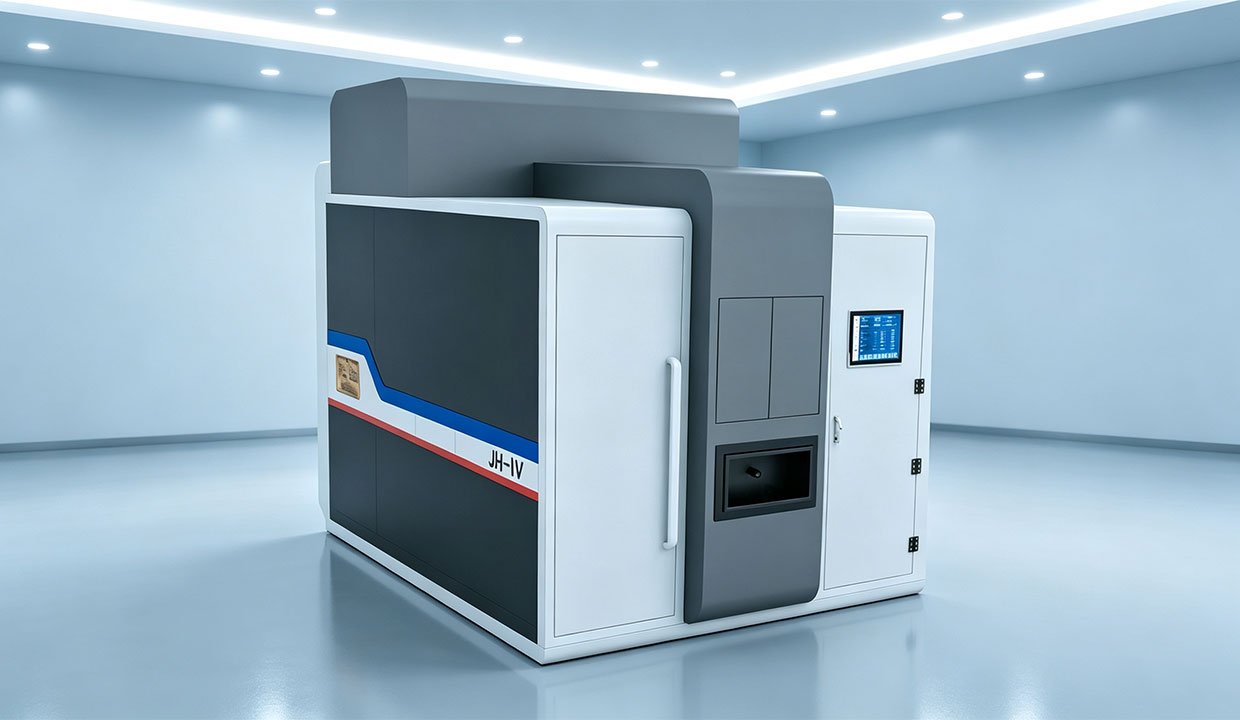
How Much Does a Cremation Furnace Cost in 2026?
A cremation furnace costs between $50,000 and $150,000 for the retort alone in 2026. A complete, permitted, fully installed system typically lands between $300,000 and $500,000. Premium high-volume units can push past $650,000 once rigging, utility work, and air-quality permitting are counted. The single most common budgeting mistake is treating the machine price as the project price — the two numbers can differ by a factor of three.
That gap matters more in 2026 than it did five years ago. Cremation now accounts for the majority of U.S. dispositions, and the National Funeral Directors Association projects the national rate will climb from 59.3% in 2022 toward 78.7% by 2040. NFDA data places 2026 cremation rates above 60% nationwide, with western states already exceeding 75%. More volume per facility means more equipment demand — and more pressure on lead times and pricing.
This guide breaks down what a cremation furnace actually costs in 2026, what drives the number up or down, how pricing has moved since 2022, and what the machine will cost you every year after you own it.
Cremation Furnace Prices in 2026: The Complete Breakdown
Industry pricing splits into two very different numbers: the retort (the combustion chamber itself) and the fully installed project. Most published price lists quote only the first.
Retort-Only vs. Fully Installed Cost
| Equipment tier | Retort only | Full installed project |
| Entry-level imported unit | $15,000 – $50,000 | Higher risk; often hard to finance or permit |
| Mid-tier, UL-listed unit | $50,000 – $150,000 | $200,000 – $350,000 |
| Standard American-made retort | $150,000 – $200,000 | $300,000 – $500,000 |
| Premium high-volume system | $300,000+ | $500,000 – $650,000+ |
Source: Funeral Home Loan 2026 crematory equipment financing guide; ranges reflect vendor quotes collected through 2025–2026.
The rule of thumb that has held through the 2026 buying cycle: a complete crematory equipment project lands in the 300,000–500,000 band, regardless of which tier you start from. What changes is how much of that budget goes to the machine versus everything around it.
Cost by Furnace Type
| Furnace type | Typical price range | Who buys it |
| Basic human cremation furnace | $50,000 – $150,000 | Small to mid-size crematoriums, low call volume |
| High-capacity human cremator | $150,000 – $400,000+ | Large facilities, multi-shift operation |
| Electric cremation furnace | $170,000+ (retort only) | Facilities targeting zero on-site emissions |
| Pet and animal cremation furnace | $5,000 – $80,000 | Veterinary clinics, dedicated pet crematories |
Source: Quality Home Air Care price breakdown; American Mortuary Equipment electric machine cost guide.
Electric units deserve their own line item. They eliminate on-site combustion emissions and typically require less maintenance, but they cost more up front and installation alone can run 130,000–330,000 because most facilities need a substantial electrical service upgrade. Fully installed electric systems frequently reach 300,000–800,000.
What Drives the Cost of a Cremation Furnace?
Five variables explain almost all of the spread between a $50,000 quote and a $650,000 one.
1. Model and Build Quality
The model tier sets the floor. An entry-level imported retort and a premium domestic system perform the same basic function, but they differ in refractory quality, control electronics, service network, and expected service life. Imported human cremation units are advertised from roughly $13,999 to $65,000 on global marketplaces, but those prices generally exclude shipping, installation, compliance modifications, and ongoing technical support — costs that can erase the initial saving within a few years.
Domestic, UL-listed equipment from established manufacturers carries a premium because it arrives with certification documentation, North American parts availability, and manufacturer-backed operator training. That documentation is not cosmetic: air-quality permits are frequently conditioned on certified equipment and manufacturer-provided operator training.
2. Chamber Capacity and Throughput
Capacity and processing rate are the second-largest price driver. A machine rated for 200 lb/hr with a 90-minute cycle sits in a very different bracket from one rated at 400 lb/hr with a 60-minute cycle and a 1,200 lb handling capacity. For reference, facilities serving roughly five bodies per day may pay twice what a single-use, low-volume model costs.
Size the machine to realistic annual call volume, not peak. An oversized unit burns fuel and refractory life on every cycle; an undersized one creates scheduling bottlenecks and forces you to turn families away.
3. Fuel Type and Energy Efficiency
Fuel choice affects both capex and opex:
- Natural gas — the North American default. Lowest equipment cost, highest exposure to gas price volatility.
- Propane — common where pipeline gas is unavailable; typically a higher cost per cremation than natural gas.
- Diesel — used in remote or mobile configurations; higher fuel cost and more emissions control complexity.
- Electric — highest up-front cost, lowest on-site emissions, and reported operating costs of roughly 5–15 per cremation in electricity.
High-efficiency burner designs add 5%–15% to the purchase price and usually pay for themselves through lower fuel consumption per cycle.
4. Emission Controls and Regulatory Compliance
Emissions compliance is the factor most often underestimated in initial budgets, because the requirement is set locally rather than nationally.
In the United States, crematory requirements are established through state and local air-quality rules approved into EPA State Implementation Plans. A representative example, Florida’s Chapter 62-296 rule as approved by the EPA, caps human crematory particulate matter at 0.080 grains per dry standard cubic foot (corrected to 7% O₂) and carbon monoxide at 100 ppm, and requires new units to provide at least a 1.0-second gas residence time at 1,800 °F in the secondary chamber, with the secondary chamber held at no less than 1,600 °F throughout the cycle.
Individual EPA permits are often stricter. One EPA-issued human cremation system permit sets PM10/PM2.5 at 0.04 gr/dscf, requires 0% visible emissions on a six-minute average, and mandates the afterburner reach 1,650 °F before the primary burner fires, maintained at 1,600 °F or above for the entire cycle.
In the United Kingdom, the Environment Agency’s crematoria process guidance requires annual periodic monitoring of particulate matter, hydrogen chloride, total organic carbon, mercury, and NOx, plus dioxin and furan sampling every three years for abated cremators.
Practically, this means emissions control adds cost in three places: afterburner and filtration hardware (+10%–25% of equipment price), continuous monitoring instrumentation, and the permitting process itself — which can take months and, in some municipalities, requires conditional-use zoning approval before you can even place the order.
5. Optional Features
| Feature | Typical price impact |
| Automatic loading system | +10% – 20% (roughly $29,756 on one quoted system) |
| Emission afterburners | +10% – 25% |
| PLC controls and continuous monitoring | +10% – 20% |
| High-efficiency burners | +5% – 15% |
| Remote diagnostics / telematics | +10% or more |
Cremation Furnace Prices vs. Previous Years
No public index tracks cremator pricing, so the most honest comparison uses vendor-quote ranges compiled across buying cycles. Read the table as directional, not as indexed data.
| Year | Entry-level imported retort | Standard domestic retort | Typical full installed project |
| 2022 | $13,999 – $65,000 | $80,000 – $150,000 | $200,000 – $350,000 |
| 2024 | $15,000 – $60,000 | $80,000 – $150,000 | $250,000 – $400,000 |
| 2025 | $15,000 – $50,000 | $150,000 – $200,000 | $300,000 – $500,000 |
| 2026 | $15,000 – $50,000 | $150,000 – $200,000 | $300,000 – $500,000 (premium: $650,000+) |
Three patterns stand out:
Imported entry-level pricing has flattened. The bottom of the market has barely moved since 2022. What has changed is buyer awareness — operators increasingly price in the compliance retrofit, spare-parts logistics, and support gap that imported units carry.
The domestic mid-tier has moved up. Quotes for standard American-made retorts have drifted from roughly 80,000–150,000 toward 150,000–200,000, tracking steel, refractory material, and control-electronics input costs.
The installed-cost gap has widened, not narrowed. In 2022, installation and compliance added roughly 120,000–200,000 on top of a domestic retort. By 2026, that delta has grown to 150,000–300,000. Crane and rigging labor, gas and electrical contractor rates, and permitting timelines have all increased faster than equipment prices. As one financing guide puts it, owners who budget for a $170,000 machine often discover a $400,000 project.
Costs Beyond the Purchase Price
Before you sign, budget for these line items separately:
| Cost category | Typical range |
| Delivery and rigging (crane operator for a multi-ton chamber) | Project-specific; frequently five figures |
| Installation labor and commissioning | $10,000 – $50,000 |
| Gas and electrical contractor work / utility upgrades | Varies; can exceed installation labor |
| Foundation and building modifications | Varies by facility |
| Air-quality permit, inspection, and zoning fees | Varies by state and municipality |
| Operator training | Often included; otherwise budget separately |
| Contingency (10–15% recommended) | — |
Lead times for custom equipment typically run 3–6 months from order to installation. Some manufacturers stock standard models for faster delivery. Financing is commonly structured over 3–5 year terms, and lenders underwrite crematory equipment differently from ordinary equipment loans: the resale market is thin, so approval leans heavily on projected call volume and cash flow rather than collateral value.
Long-Term Operating and Maintenance Costs
Total cost of ownership over the equipment’s 15–20 year service life usually exceeds the purchase price.
Per-cremation operating cost: roughly 5–15 in electricity for electric units, or 10–30 in fuel for gas-fired units, depending on local energy prices and cycle efficiency.
Annual maintenance: 3,000–10,000 for most operations, covering inspection, cleaning, calibration, and minor repairs.
Refractory rebuild: 15,000–40,000 every 3–7 years, driven by case volume and thermal cycling. This is the largest recurring cost most operators underbudget for.
Compliance monitoring: annual emissions testing and continuous monitoring calibration add ongoing expense. In the UK, for example, annual periodic monitoring is mandatory for several parameters, with dioxin sampling every three years.
A practical annual opex planning figure for a mid-volume facility running a gas-fired retort: 15,000–45,000 per year, before financing costs.
Buying Guidance: Five Decisions That Change Your Total Cost
- Size to three-to-five-year volume, not today’s volume. Overbuilding wastes fuel and refractory life; underbuilding caps revenue.
- Price the permit before the machine. Air-quality permitting is the longest-lead item in most projects and occasionally the one that kills them. Confirm zoning classification first.
- Compare total cost of ownership, not sticker price. A $50,000 imported unit and a $175,000 domestic unit are not the same purchase. Model five-year cost including parts, downtime, retrofit, and support.
- Verify operator training is included and documented. Many permits require that a manufacturer-trained operator be present whenever the unit runs.
- Decide new vs. refurbished deliberately. Refurbished units reduce capex but shorten the refractory warranty window and can complicate compliance documentation. If financing is involved, confirm the lender will lend against refurbished equipment at all.
Frequently Asked Questions
How much does a cremation furnace cost in 2026? A retort alone costs 50,000–150,000 for a mid-tier UL-listed unit. A complete installed project — machine, rigging, utility work, and permitting — typically costs 300,000–500,000, with premium high-volume systems reaching $650,000 or more.
Is a cremation furnace the same as a cremator or retort? Yes. “Cremation furnace,” “cremator,” “retort,” “cremation chamber,” and “crematorium oven” all describe the same equipment. “Retort” usually refers to the combustion chamber itself, while “crematory equipment” describes the chamber plus afterburner, stack, controls, and monitoring hardware.
How much does a cremation furnace cost per cremation to run? Fuel or electricity runs roughly 5–30 per cremation depending on fuel type and local energy prices, plus 3,000–10,000 in annual maintenance and periodic refractory rebuilds of 15,000–40,000 every three to seven years.
Do I need an emissions permit to operate a cremation furnace? Yes, in virtually every jurisdiction. Requirements are set locally and approved through state or national frameworks, and typical limits cover particulate matter, carbon monoxide, and visible opacity, along with continuous secondary-chamber temperature monitoring.
How long does it take to buy and install a cremation furnace? Custom equipment typically takes 3–6 months from order to installation. Permitting and zoning approval can add several months on top and should be started before placing the order.
Can I buy a used cremation furnace? Used and refurbished units are available and cost less up front, but they carry shorter refractory warranties and may complicate compliance documentation and financing approval.
The Bottom Line
Budgeting for a cremation furnace in 2026 means budgeting for two numbers, not one. The machine itself runs 50,000–150,000 for a mid-tier unit or 150,000–200,000 for a standard domestic retort. The project around it — installation, utility work, permitting, and commissioning — pushes the realistic total to 300,000–500,000, and past $650,000 for premium high-volume systems.
Then plan for the years after: 15,000–45,000 annually in fuel, maintenance, and compliance, with a refractory rebuild every three to seven years. With U.S. cremation rates projected to keep climbing toward 80% by 2040, the volume is there — the question is whether the equipment you choose can serve it at a cost per cremation your pricing model supports.
If you are scoping a new crematory or replacing an aging retort, request a quote with your projected annual case volume, fuel availability, and local air-quality requirements. The right configuration depends on all three.