Dignity. Technology. Sustainability. — Redefining the Afterlife Industry.
Dignity. Technology. Sustainability. — Redefining the Afterlife Industry.
Cremation Flue Gas Purification System
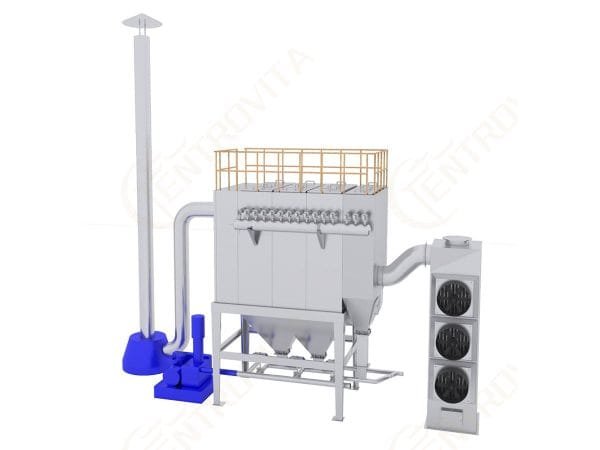
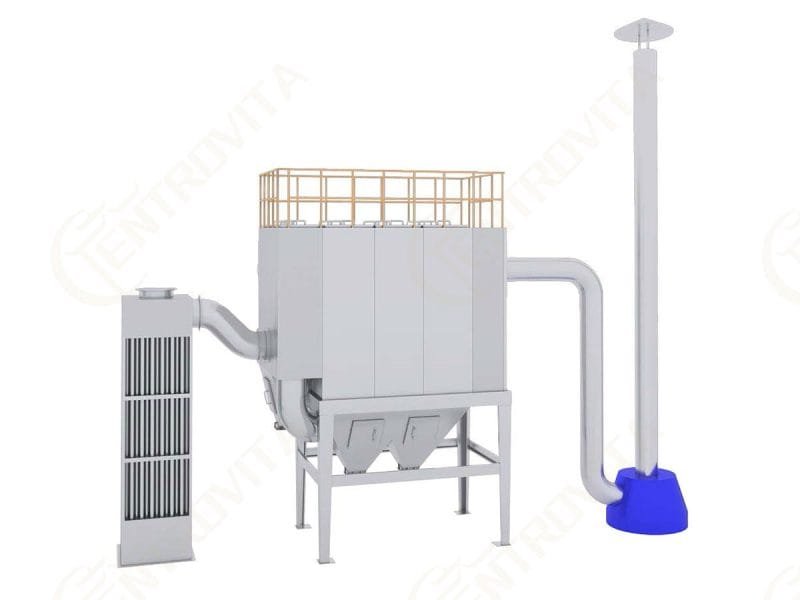
The ENTROVITA GH-WQ-FL-12 is a true 1-to-1 package that cools, de-acidifies, dedusts, and deodorises exhaust in one compact ducted line, with a routine any technician can learn in a day.
- Premium Quality
- Worldwide Shipping
- Best Warranty
Opening Overview
Choosing the right cremation flue gas purification system is one of the highest-stakes decisions a crematorium makes, because it determines whether your stack stays compliant for the next decade. The ENTROVITA GH-WQ-FL-12 answers that question for single-cremator facilities. Configured as a true “one cremator, one system” (1-to-1) package, it cools, de-acidifies, dedusts, and deodorises cremator exhaust in a single continuous ducted line — with a compact footprint and an operating routine any technician can learn in a day.
How the GH-WQ-FL-12 Purification Process Works
Cremator exhaust enters the line at the flue duct connection and passes into a secondary combustion chamber, where it is held at 1,000–1,200 °C. That high-temperature stage breaks down the harmful compounds remaining in the gas stream.
Gas above 1,000 °C then enters the quench tower, where air-cooled heat exchange drops it below 200 °C in seconds. This rapid descent skips the 300–760 °C window in which dioxins re-form — so dioxin generation is prevented at the source instead of being captured afterwards.
The cooled gas continues through a semi-dry de-acidification stage, activated carbon adsorption and a bag filter. Together, these stages remove odour, sulphur dioxide (SO2), heavy metals, and particulate matter. The induced-draft fan draws in the cleaned gas and releases it through the stack within regulated limits.
Core Features and Performance Advantages
No odour, no black smoke
Because the full gas stream is treated before release, the system runs without the smell and visible smoke that unpurified cremation exhaust produces — a decisive point for crematoria located near homes, hospitals or commercial districts.
Dioxin prevention, not just filtration
The quench stage is the design’s technical heart. By pulling temperature down from above 1,000 °C to under 200 °C in roughly two seconds, the process never dwells in the range where dioxins form.
One integrated multi-stage purification module
The heart of the line is a modular quick-assembly unit that combines four functions in one connected body:
- Flame arrest — intercepts glowing carbon particles carried in the gas stream, with a 99% interception rate.
- De-acidification and desulphurisation — hydrated lime (calcium hydroxide) is combined with the gas in a mixing chamber for neutralisation, supported by automatic dosing and injection of lime and activated carbon powder.
- Bag dust collection — P84 membrane filter bags (rated to 260 °C) trap fly ash and particulate. Inlet gas is held at ≥180 °C and outlet gas at ≥130 °C so the bags never reach dew point. An ash settling chamber and discharge device are built in, with K-type thermocouples (20–800 °C) for monitoring.
- Activated carbon adsorption — honeycomb carbon blocks (100 × 100 × 100 mm) in a drawer-type housing adsorb residual dioxins, heavy-metal oxides and chlorides. Service is a simple drawer pull; replace the charge once saturated (approximately every 5,000 cremations).
Built for a long service life
The purification housing and cooling reactor are fabricated from 3 mm heat- and corrosion-resistant stainless steel, rated not to be corroded through within 10 years. The cooling tubes use 2.5 mm seamless stainless steel, specified against the cremator’s real flue gas flow.
Small footprint, quick assembly and simple operation
The line ships as a modular package with a dedicated ladder and platform set, so it occupies comparatively little floor area and can be assembled on site rather than built as a permanent structure. Day-to-day operation is straightforward and does not demand specialised technical staff.
Compliance you can quote to an inspector
Stack emissions are designed to perform better than the limits in GB 13801-2015 (Air Pollutant Emission Limits for Oil-Fired Cremators).
Applications and Target Users
| Fits well | Why |
| Single-cremator crematoria and funeral homes | Purpose-built 1-to-1 configuration; no over-specification |
| Existing crematoria retrofitting a non-compliant exhaust line | Modular package adapts to existing flue duct connections |
| Facilities in urban or residential areas | Odour-free and smoke-free operation with dust control |
| Municipal and private operators facing emission inspections | Designed against a published national emission standard |
| Sites where floor space is tight | Compact footprint and integrated purification module |
| Operators without a specialist engineering team | Simple, learnable operating and maintenance routine |
Not the right fit: facilities running two cremators that require a shared system (a “1-to-2” configuration is available as a separate scope ).
GH-WQ-FL-12 Technical Specifications
| No. | Component | Qty | Technical data |
| 1 | Air-cooled heat exchanger | 1 unit | L962 × W876 × H3100 mm. Insulated high-efficiency cooling reactor reduces exhaust temperature to below 180 °C within 2 seconds. Housing: 3 mm heat- and corrosion-resistant stainless steel, not corroded through within 10 years. Cooling tubes: 2.5 mm premium seamless stainless steel, sized to the cremator’s actual flue gas flow for instant-quench duty. |
| 2 | Modular quick-assembly flue gas purification unit | 1 set | L3378 × W2205 × H5617 mm. Combined flame arrest / de-acidification & desulphurisation/bag dust collection / activated carbon adsorption unit. Flame arrest: 99% interception. De-acidification: calcium hydroxide neutralisation in the mixing chamber, with automatic activated-carbon and lime dosing and injection. Bag filter: P84 membrane bags rated to 260 °C; inlet ≥180 °C, outlet ≥130 °C to prevent condensation; ash settling chamber and discharge device; K-type thermocouples 20–800 °C. Bypass: 3 pneumatic valve sets, DN400. Pulse valves: aluminium alloy, quick-release. Controller: 1 set. Air compressor module: 1 set (screw compressor, pressure-vessel-certified receiver, dryer, high-precision filters). Activated carbon: honeycomb blocks 100 × 100 × 100 mm, drawer-type, replaced when saturated (approx. every 5,000 cremations). Housing: 3 mm stainless steel, 10-year corrosion resistance. |
| 3 | Ladder and platform set | 1 set | Assembled size: L5332 × W2205 × H5617 mm |
| 4 | Flue gas ducting assembly | 1 set | Flanged stainless steel ducting — simple to dismantle, corrosion-resistant. Bends welded in premium stainless steel, with 90° welded elbows; joints gasketed and bolted with stainless bolts and nuts for an airtight connection. Branches formed with welded stainless tees. Base anchored with stainless expansion bolts and cast in concrete. Pneumatic valves with automatic open/close switching. |
| 5 | Induced draft fan | 1 unit | High-pressure induced draft fan, 18.5 kW motor; holds furnace pressure between −450 Pa and −650 Pa with an empty furnace. Variable-frequency technology with a dedicated inverter for on-demand air volume adjustment. |
| 6 | Exhaust stack (steel pipe) | 1 pc | 3 mm heat- and corrosion-resistant stainless steel; diameter ≥40 cm; height ≥12 m; gas sampling port reserved at 4 m. Base in 4 mm stainless steel. Stack size: φ450 × 8000 mm. |
Frequently Asked Questions
How does this system prevent dioxin formation?
It removes the conditions dioxins need. Cremator gas is held at 1,000–1,200 °C for secondary combustion, then quenched below 200 °C within about two seconds. Because the gas never lingers in the 300–760 °C formation window, dioxins are avoided rather than filtered out later.
Does the purified exhaust meet emission regulations?
The design targets emissions better than the limits set by GB 13801-2015, the standard for air pollutant emissions from oil-fired cremators. Local requirements vary by region, so share your site’s target values with us, and we will confirm the configuration.
How much maintenance does the system need?
Routine work is limited. The drawer-type activated carbon is replaced when saturated — typically around 5,000 cremations — and the ash settling chamber is emptied as it fills. Filter bags, pulse valves and thermocouples are all serviceable from outside the unit.
Can it be retrofitted onto an existing cremator?
Yes. The package connects at the flue duct interface and is assembled on site from modular sections, which makes retrofit onto a working cremator practical in most facilities. A site survey is needed to confirm duct routing and stack position.
Can one system serve two cremators?
Yes — a “1-to-2” configuration is available in which two cremators share a single purification line. The GH-WQ-FL-12 as described here is the 1-to-1 package.
Next Step: Get a Layout and Quotation
Send us your cremator details, flue duct position, available floor area and the emission limits your authority enforces. We will return a dimensioned layout and a full quotation for the GH-WQ-FL-12.